
Medical logistics & support / A Xavtli program
Mavreach
Bring medical support to the edge.
Mavreach is Xavtli’s development program for automated logistics and medical support at the edge. It connects what a care team needs with the supplies, equipment, delivery and continuing support to act.
For civilian, defense and federal partners
The need
Care depends on what arrives.
Medical knowledge is not enough if the right supplies and tools cannot reach the team. Mavreach is being designed around that full support chain, from a defined need to receipt and use at the point of care.
Illustrative use
Consider a team beyond normal supply routes.
A care team identifies a medical need. A support hub prepares the appropriate equipment and supplies, a suitable transport system delivers them, and receipt is confirmed. Connected information helps the team use what arrives and identify the next need.
How it would work
Connect the need to the response.
Medical Capability as a Service (MedCaaS), including AI as a Service (AIaaS) in development.
- 01
Know what is needed.
Connect the medical task with the required supplies, tools and supporting information. Keep people accountable for decisions.
- 02
Prepare and move it.
Develop configurable medical packages and integrate suitable delivery systems. Autonomous drones are a development direction, not a selected or proven delivery fleet.
- 03
Confirm and support.
Track receipt and support the team at the destination. Use feedback to plan replenishment and evaluate whether the support was useful.
The direction
One core. Many settings.
Military operations, disaster response, civilian care and frontier industry can share this need. Automated delivery could reduce the personnel needed solely to move medical supplies into difficult settings, while supporting the people already providing care.
Defense compatibility, security and qualifying supply chains inform development from the outset. Blue UAS and other procurement requirements must be assessed for the selected configuration; no certification, government approval or contract is claimed.
Meet the program leadershipWho we build with
Start with a mission and a measurable test.
Intended partners include medical-logistics operators, federal and defense organizations, and civilian care networks. Proposed revenue paths include funded evaluations, system integration and continuing support. These require a confirmed buyer, useful performance and a workable purchasing route.
Development status
The proposed first evaluation uses manual handling and inert supplies in a nonclinical setting to test the support workflow. Automated transport and clinical use are later steps with separate evidence and approval requirements.
A few clear answers.
Is Mavreach only for the battlefield?
No. Its core is automated logistics and medical support at the edge. Combat operations, disaster relief, civilian care and demanding workplaces are applications of that broader capability.
Is Xavtli building a drone company?
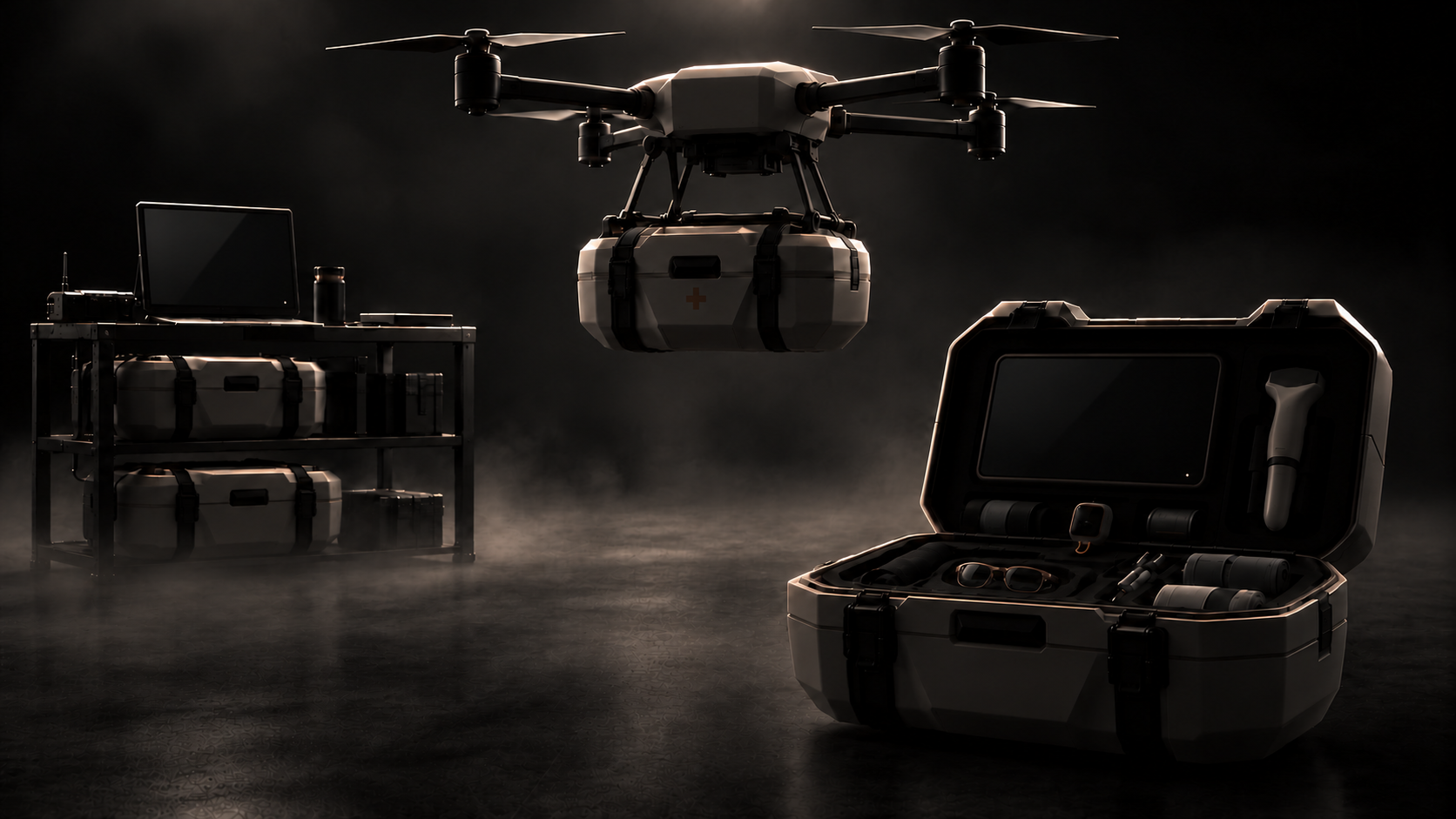
The medical-support system is the focus. Mavreach is intended to work with suitable transport platforms and partners. The drone imagery illustrates the direction, not an existing fleet or partnership.
How does medical support differ from medical autonomy?
Automating delivery does not mean automating clinical judgment. Mavreach connects supplies, equipment and information to a care team. Clinical decisions remain with appropriately qualified providers.
Part of Xavtli
Different needs.
Shared capability.
Explore the other programs behind Medicine for the Edge.